ESA Member States Call for Cancellation of Earth Return Orbiter
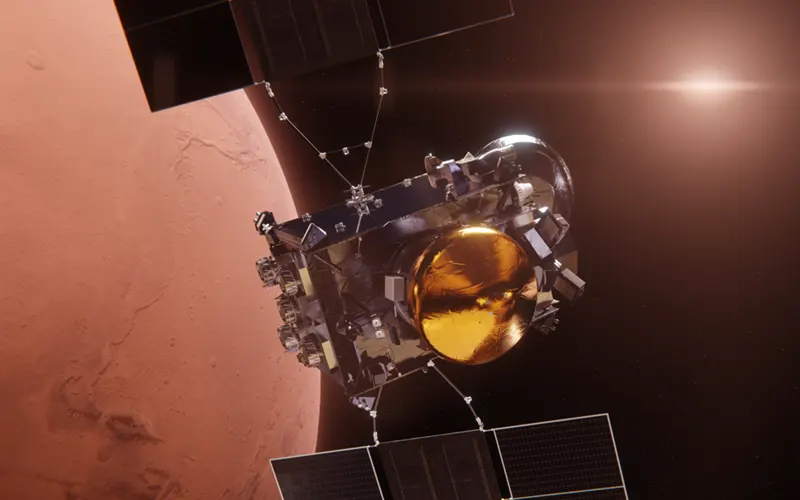
European Space Agency (ESA) member states have formally requested the cancellation of the Earth Return Orbiter, the spacecraft designated to retrieve and deliver Martian samples to Earth. The request follows a United States Senate vote in January 2026 that eliminated federal funding for NASA’s Mars Sample Return (MSR) program, effectively terminating the joint effort. ESA’s Director of Human and Robotic Exploration, Daniel Neuenschwander, confirmed the decision during a press conference after the 345th ESA Council meeting, stating that the MSR mission is no longer planned for continuation. The cancellation request was presented as part of a broader discussion on the funding shortfall affecting ESA’s Exploration programme.
The Earth Return Orbiter, awarded to Airbus Defence and Space under a €491 million contract in October 2020, was intended to capture sample canisters launched from the Martian surface and return them to Earth as ESA’s primary contribution to the MSR architecture. An independent NASA review board in September 2023 judged the mission’s budget and schedule expectations to be unrealistic, a finding that preceded the Senate’s funding cut. Neuenschwander indicated that ESA has begun talks with Airbus Defence and Space to manage the transition, emphasizing the potential reuse of the orbiter’s electric propulsion system and other technology. The contract and development timeline had been aligned with NASA’s planned launch windows for the sample retrieval and return phases.
The termination of the Earth Return Orbiter removes a critical element from the original MSR concept, reducing the likelihood of a near‑term sample‑return capability from Mars under the current bilateral framework. ESA’s decision to seek cancellation reflects a reassessment of resource allocation within its Exploration programme and may influence future collaboration models with NASA. The agency’s focus on extracting value from existing hardware, such as repurposing the electric propulsion subsystem, suggests an intent to preserve technological investments despite the program’s cancellation. This shift could reshape European contributions to planetary‑science missions and affect the strategic planning of subsequent Mars exploration initiatives.