A Hot Start to Spring in the Southwest
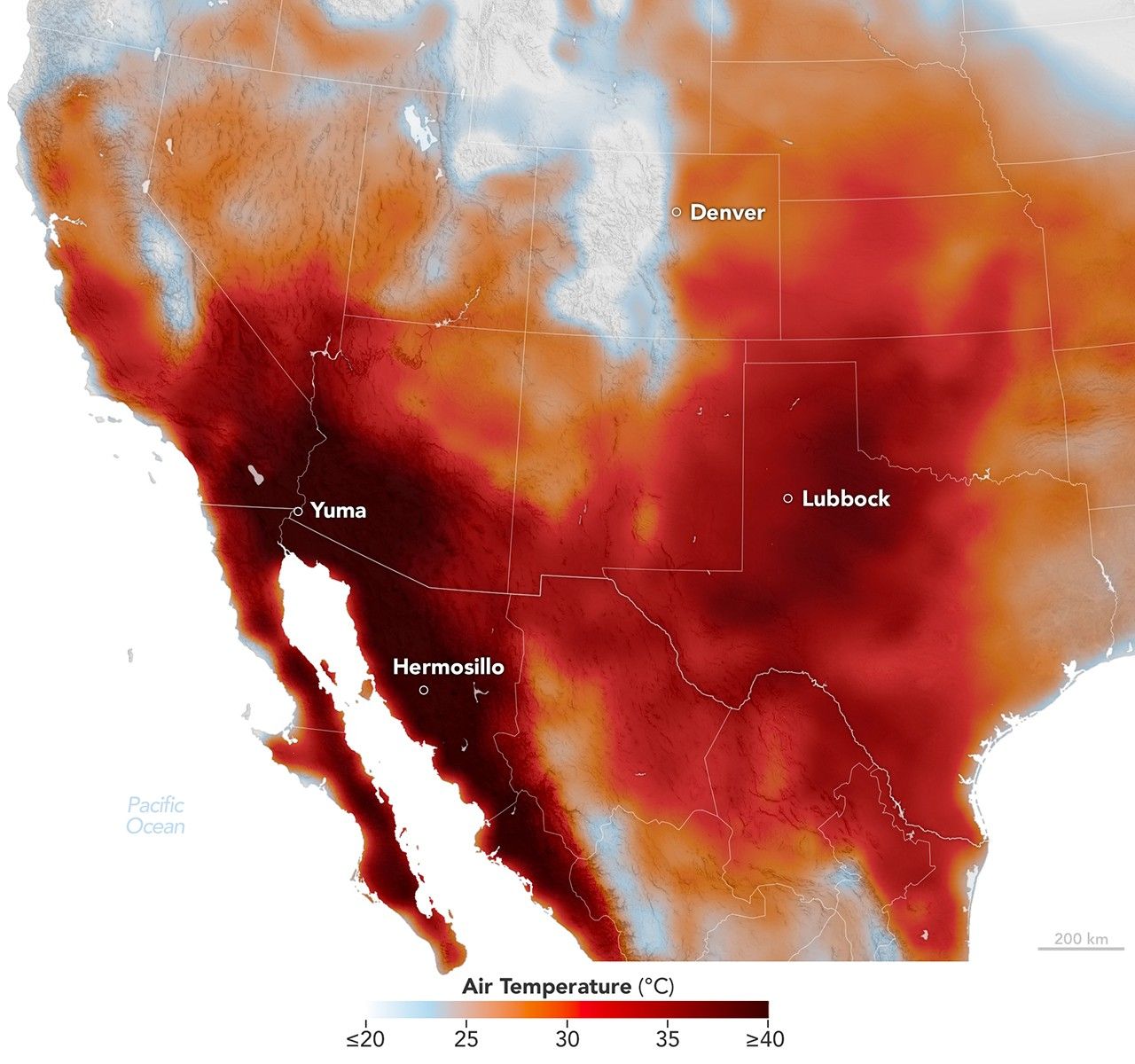
NASA Earth Observatory reported that extreme heat swept across the southwestern United States and northern Mexico on March 20, 2026, producing record-breaking temperatures during the first days of Northern Hemisphere spring. The analysis, published March 26, 2026, showed that temperatures in several states exceeded 100 degrees Fahrenheit, with some locations recording the highest March temperatures on record. The early-season heat event affected areas including Arizona, California, Texas, and northern Mexico, where persistent high-pressure conditions created summer-like weather patterns across a broad region. The heat wave emerged around the spring equinox, highlighting unusually early seasonal warming across the Southwest.
NASA’s visualization used GEOS-FP data from the Goddard Earth Observing System, combining meteorological observations with atmospheric modeling to estimate air temperatures at 2 meters above ground level on the afternoon of March 20. The model showed widespread temperatures reaching or exceeding 104°F (40°C), particularly across desert regions. Ground measurements confirmed the intensity of the event, with Yuma, Arizona, recording 109°F, which was 28 degrees above the 1991–2020 climatological average for that date. Additional locations near Yuma and Martinez Lake in Arizona, along with Ogilby and Winterhaven in California, reached 112°F (44°C), tying for the highest U.S. temperatures observed that day. Lubbock, Texas experienced several days of mid to upper 90s, while Hermosillo, Mexico, set a new March record at 108°F (42°C).
The extreme heat was driven by a persistent high-pressure system that remained over the region for more than a week, producing dry air and clear skies across a large portion of the Southwest and northern Mexico. Meteorologists noted the system’s strength resembled summer-season conditions, allowing temperatures to rise unusually early in the year. Forecasts indicated the heat pattern could shift eastward into the Midwest and Southeast United States, expanding the geographic footprint of the warm conditions. NASA’s analysis highlights how satellite-assisted modeling and surface observations provide detailed insight into large-scale atmospheric events affecting seasonal climate variability across North America.