NASA Names Scientists to Support Lunar South Pole Science
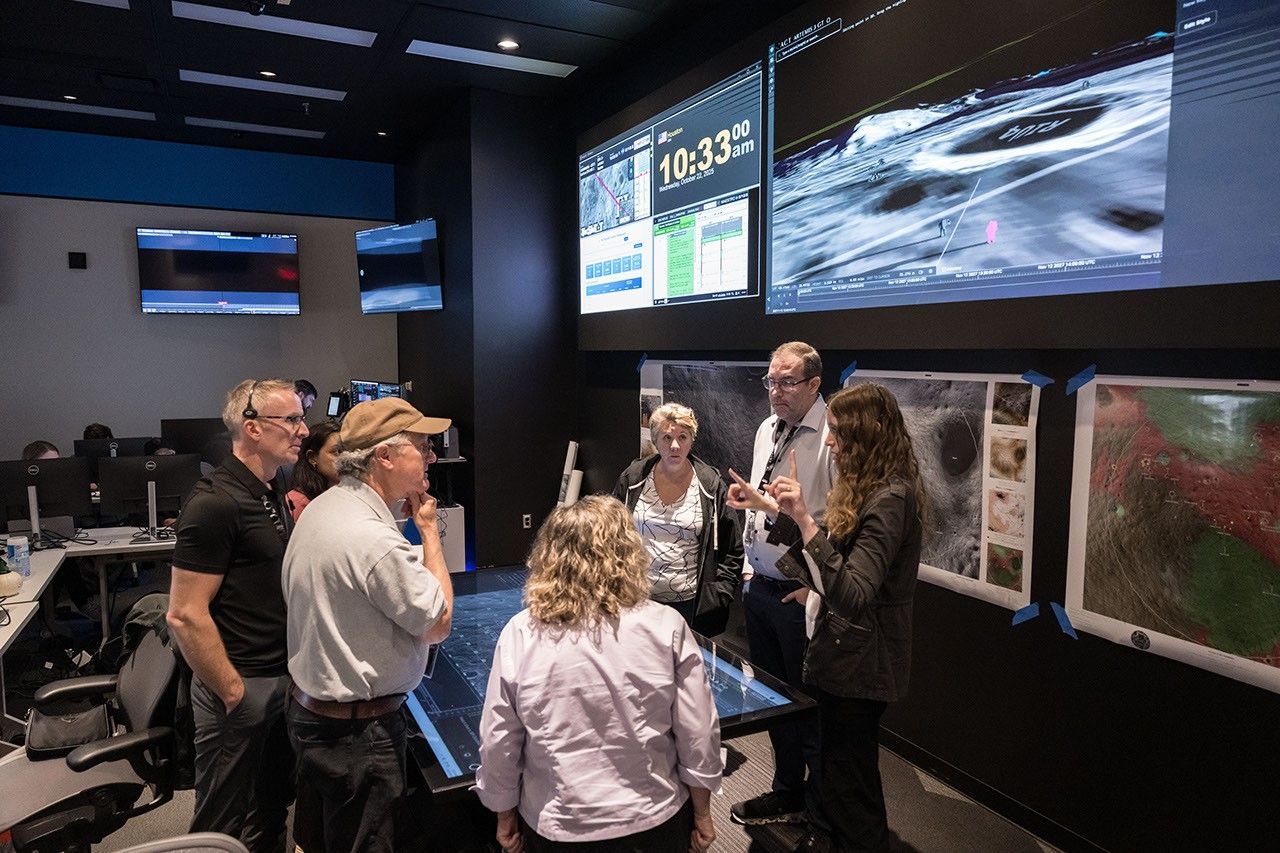
NASA announced on 27 March 2026 that it has appointed ten scientists to develop the surface‑science plan for the upcoming Artemis lunar landing near the Moon’s South Pole. The selections were made by the agency’s Science Mission Directorate in Washington, D.C., and the scientists will join the first Artemis lunar surface science team headquartered at Goddard Space Flight Center in Greenbelt, Maryland, with additional coordination at NASA Headquarters and Johnson Space Center in Houston. Their mandate includes defining instrument deployments, site observations and rock‑sample collection for the crew that will touch down on the polar region later this decade.
The appointed researchers are Kristen Bennett (Northern Arizona University), Aleksandra Gawronska (Catholic University of America), Timothy Glotch (SUNY Stony Brook), Paul Hayne (University of Colorado Boulder), Erica Jawin (Smithsonian Institution), Jeannette Luna (Tennessee Technological University), Sabrina Martinez (Johnson Space Center), Jamie Molaro, Hanna Sizemore and Catherine Weitz (all of the Planetary Science Institute). They will operate under project scientist Noah Petro and deputy project scientist Padi Boyd, supporting the inaugural Artemis geology team led by Brett Denevi of the Johns Hopkins University Applied Physics Laboratory. The team’s responsibilities span pre‑mission planning, real‑time science operations during the landing, and post‑mission analysis, targeting high‑priority questions such as the Moon’s impact history and the distribution of shallow ice deposits within permanently shadowed craters that coexist with peaks of near‑constant illumination.
Integrating these scientists into Artemis reflects NASA’s broader strategy to embed rigorous scientific inquiry within human‑exploration missions, establishing operational processes that will scale to increasingly complex lunar surface and subsurface investigations. By leveraging the unique capabilities of astronauts on the South‑Pole terrain, the program aims to generate data that supports sustained lunar presence, informs economic utilization of lunar resources, and creates a validated pathway for future crewed missions to Mars. The effort builds on lessons from the Apollo era while positioning Artemis as a cornerstone of the current “Golden Age” of lunar exploration.