Curiosity Blog, Sols 4838-4844: Wrapping Up the Boxwork Terrain
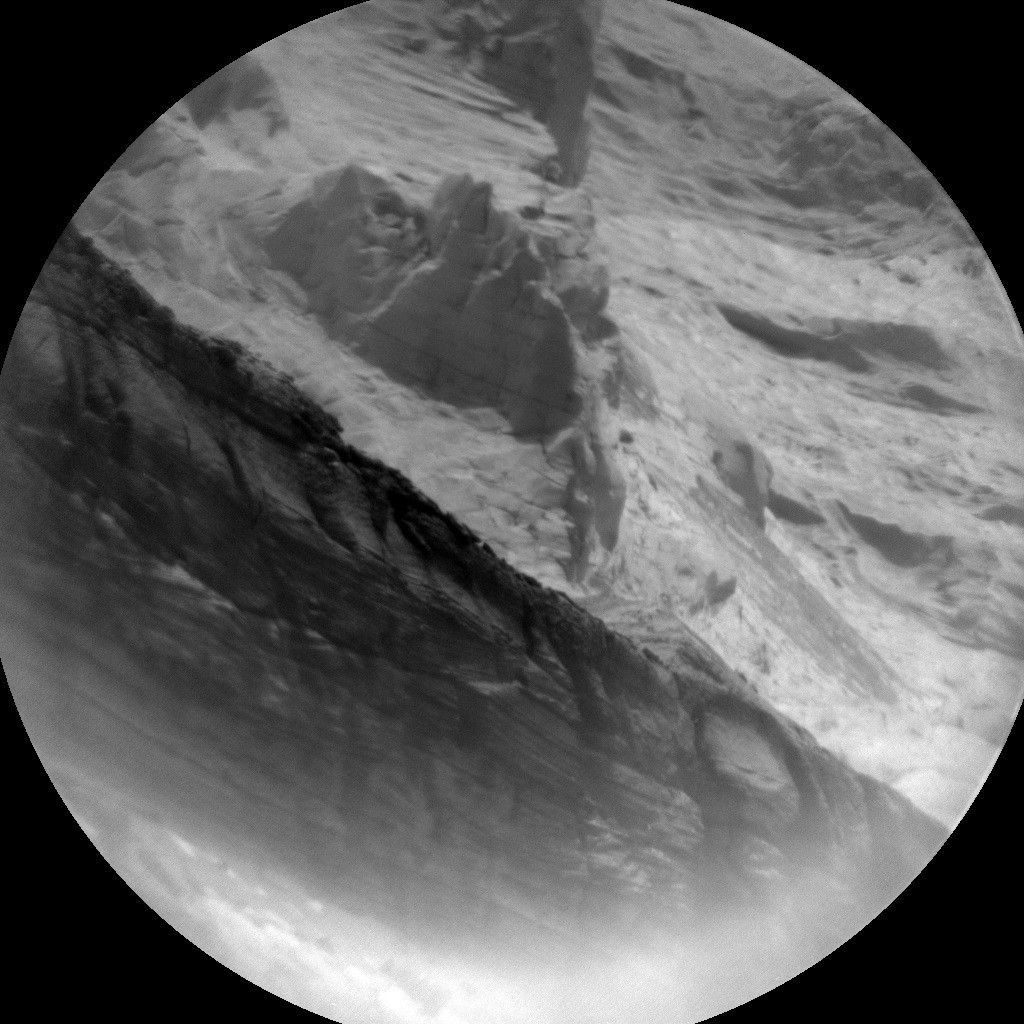
NASA’s Curiosity rover completed a week‑long series of science observations and engineering tasks that wrapped up its months‑long investigation of the boxwork terrain on the southern shoulder of Mount Sharp in Gale Crater. The activities spanned Martian sols 4838 through 4844, with the final drive and instrument measurements recorded on sol 4844, and were reported in a NASA blog entry dated 26 March 2026. During this interval the rover captured a high‑resolution Remote Micro‑Imager (RMI) frame of a ridge on 20 March 2026 at 03:02:35 UTC, marking the conclusion of the boxwork campaign before Curiosity moves toward new geological targets.
The campaign employed Curiosity’s ChemCam suite—laser‑induced breakdown spectroscopy (LIBS) and the mast‑mounted RMI—to analyze targets such as Salar de Maricunga, El Misti, Saipina, Paniri, Tacitas, and the newly selected “Llisa” rock formation. Mast Camera (Mastcam) and Navigation Camera (Navcam) provided contextual imaging, 360‑degree panoramas, and dust‑devil movies, while the Mars Hand Lens Imager (MAHLI) and Alpha Particle X‑ray Spectrometer (APXS) examined brushed bedrock at Toro Wharku, Chusumayo, Sierra Gorda, and other outcrops. The Dust Removal Tool (DRT) cleared surface material on Toro Wharku, and subsequent MAHLI imaging captured microscopic details of the adjacent ledge Rincodillas. Over the week the rover executed three drives—35 m, 39 m and an 11 m traverse—crossing the contact between the boxwork structures and an adjacent sulfate unit. Wheel wear was documented with a full set of MAHLI wheel images, and an Autonomous Exploration for Gathering Increased Science (AEGIS) routine processed Navcam data to select a ChemCam LIBS target without human intervention.
The boxwork study has yielded a suite of compositional and morphological data on sedimentary ridges and buttes that inform the stratigraphic relationship between the ancient fluvial deposits and overlying sulfate layers. Concluding this segment of the mission positions Curiosity to investigate the sulfate unit and other unexplored terrains, extending the rover’s contribution to Mars geochemistry and atmospheric monitoring as it continues its primary science objectives beyond Mount Sharp’s boxwork formations.