La NASA presentará el telescopio Roman completo y ofrecerá una conferencia de prensa
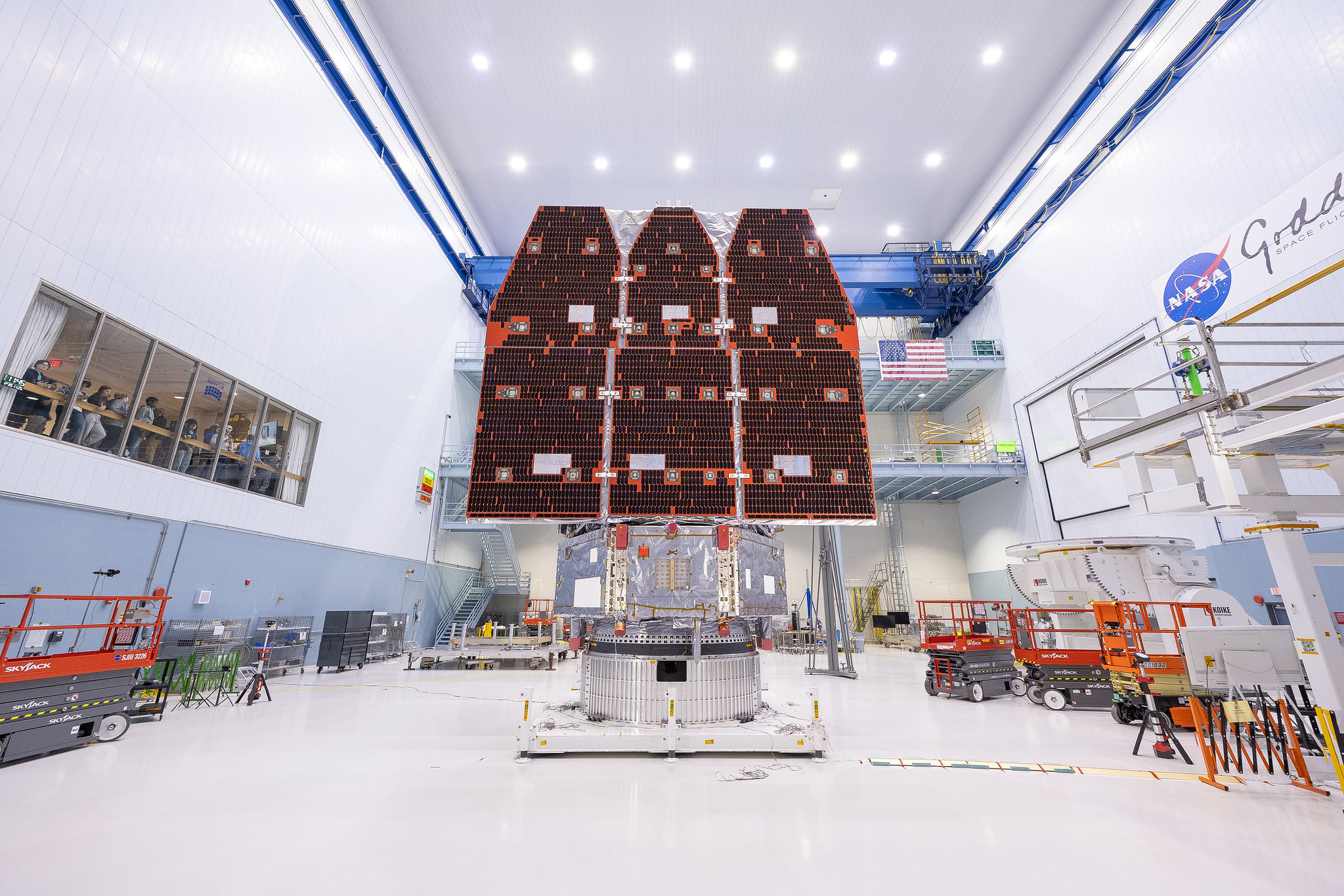
NASA will showcase the fully assembled Nancy Grace Roman Space Telescope at a media briefing on Tuesday 21 April 2026, 4:00 p.m. EDT, in the cleanroom of the Goddard Space Flight Center in Greenbelt, Maryland. The event will be streamed on NASA’s YouTube channel and will precede the telescope’s transport to the Kennedy Space Center for launch. Current schedules list a launch no earlier than autumn 2026, with a nominal target of May 2027, and the integration team reports progress that supports the earlier window.
The telescope’s two primary structural segments were joined in Goddard’s largest cleanroom, completing the final assembly phase. Project management resides at Goddard, while the Jet Propulsion Laboratory, Caltech/IPAC, the Space Telescope Science Institute, and a consortium of university researchers contribute to system development. Industrial partners BAE Systems Inc., L3Harris Technologies, and Teledyne Scientific & Imaging provide hardware and engineering support. The European Space Agency, Japan’s JAXA, France’s CNES, and Germany’s Max Planck Institute for Astronomy also supply components and expertise. After integration, the observatory will be transferred to the Kennedy Space Center for launch on a yet‑to‑be‑confirmed vehicle. The briefing will allow accredited journalists to tour additional Goddard facilities and interview experts on the Artemis Lunar Environment Monitoring payload, the DAVINCI Venus probe, the Habitable Worlds Observatory concept, and the Dragonfly mission to Titan. Media accreditation must be confirmed with Rob Garner, with foreign outlets registering by 1 April and U.S. outlets by 10 April; telephone participation requires prior notice to Alise Fisher. The press conference will feature NASA Administrator Jared Isaacman, Associate Administrator Nicky Fox, Roman Project Manager Jamie Dunn, and Principal Investigator Julie McEnery.
Named for NASA’s first chief astronomer, the Roman telescope is intended to deliver wide‑field, high‑resolution imaging of the cosmos and to test direct‑imaging techniques for exoplanets orbiting nearby stars. Its deployment complements ongoing NASA programs such as Artemis and upcoming planetary missions, reinforcing a collaborative framework that includes both domestic and international partners. The April presentation represents one of the last opportunities to view the fully integrated observatory before its departure for launch preparation.