ESA Awards OHB a €248 Million Contract to Build Weather Satellite Constellation
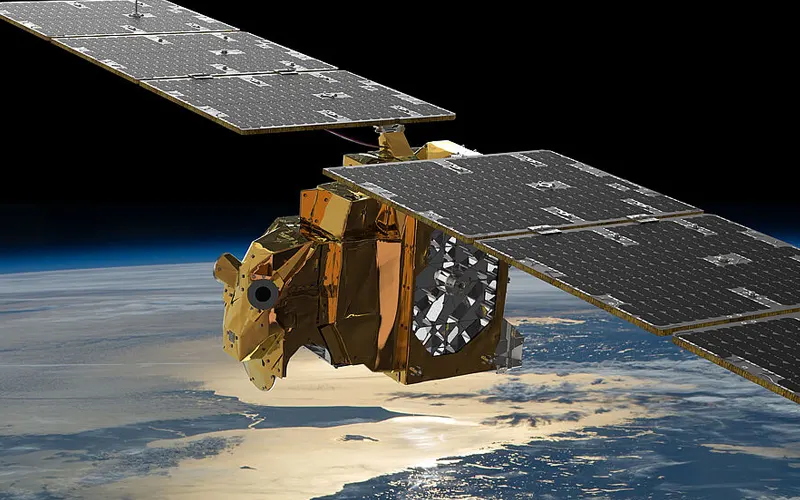
The European Space Agency has awarded a €248 million contract to OHB Sweden to design and build the EUMETSAT Polar System – Sterna (EPS‑Sterna) satellite constellation for weather and climate monitoring, ESA and company officials confirmed March 26, 2026. The contract was signed in Bremen, Germany, and will support deployment of 20 small polar‑orbiting satellites intended to deliver frequent atmospheric sounding data over high latitudes, enhancing Europe’s global weather prediction capabilities. This award represents a significant institutional investment in polar Earth observation infrastructure for Europe’s meteorological community.
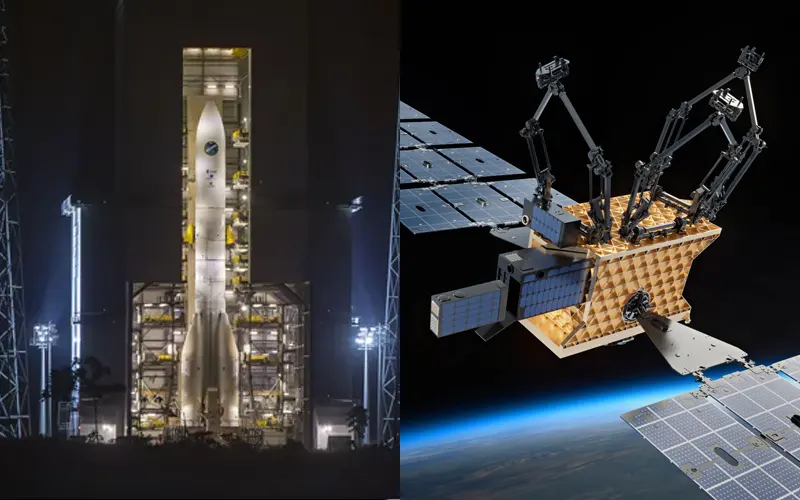
Under the EPS‑Sterna programme, OHB Sweden will develop and manufacture the satellites, which are based on a small‑satellite platform optimized for polar, sun‑synchronous orbits designed to complete multiple passes per day over the Arctic and mid‑latitude regions. Each spacecraft will carry microwave sounding instruments for measuring atmospheric temperature, humidity, and cloud properties, data that feed into numerical weather prediction models used by national and international forecasting systems. The constellation is funded by ESA on behalf of EUMETSAT member states, with launches scheduled to begin in 2029 and continue through the early 2030s to ensure operational continuity. The EPS‑Sterna set builds on earlier polar weather missions, including the Arctic Weather Satellite, and is intended to fill persistent data gaps in high‑latitude coverage that have challenged existing geostationary systems.
The contract marks one of the largest small‑satellite manufacturing awards for the OHB Group, underscoring a broader push within Europe to strengthen sovereign Earth observation capacity. By producing a constellation of meteorological satellites tailored to polar coverage, ESA and EUMETSAT aim to improve forecast accuracy, climate monitoring, and extreme weather response throughout the region. This initiative also aligns with global efforts to enhance environmental data continuity and predictive modelling in support of climate change assessment and international forecasting cooperative frameworks.