ESA Regains Contact With Lost Proba-3 Spacecraft

European Space Agency ground controllers have successfully reestablished communications with the Coronagraph spacecraft of the Proba‑3 mission after more than a month without contact, mission operators announced this week. The signal was received by ESA’s Villafranca ground station in Spain, confirming the satellite is in safe mode and transmitting basic telemetry following an anomaly in mid‑February that caused loss of orientation and radio silence. This development follows sustained efforts by ESA engineers to locate and regain control of the spacecraft, which had drifted into an uncontrolled attitude state and shut down essential systems.
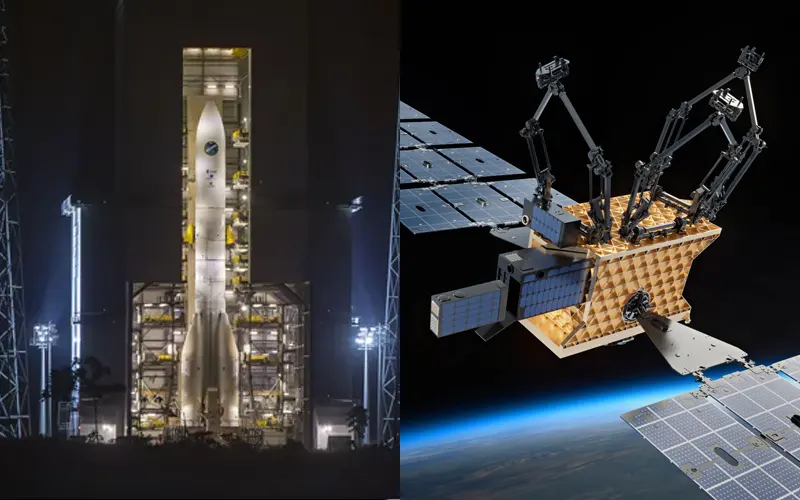
Proba‑3 is a dual‑satellite solar observation mission designed to demonstrate millimetre‑level precision formation flying to create artificial solar eclipses for continuous imaging of the Sun’s corona. The two mini‑satellites, the Coronagraph and the Occulter, were launched on 5 December 2024 aboard a PSLV‑XL launcher into a highly elliptical Earth orbit. They normally maintain a separation of about 150 metres so that the Occulter blocks the Sun’s bright disk and the Coronagraph can observe the rarified solar atmosphere without direct glare. After the loss of contact, mission teams used optical and radar tracking to estimate the Coronagraph spacecraft’s rotational state and target communications attempts. Renewed contact confirmed the satellite’s solar panels are receiving sunlight and generating power, allowing batteries to recharge and essential electronics to remain stable as post‑anomaly diagnostics continue.
Proba‑3’s restored link is an important milestone for ESA’s solar science and technology demonstration portfolio, reaffirming the resilience of the mission’s design and the value of precision formation flying techniques for future space observatories. The mission’s extended dataset is expected to provide insight into solar corona dynamics and space weather phenomena, and the recovery effort underscores the complexity of maintaining coordinated multi‑spacecraft operations. Continued health assessments will determine when the mission can resume its primary science objectives and further formation‑flying experiments.