NASA Selects Intuitive Machines to Deliver Artemis Science, Tech to Moon
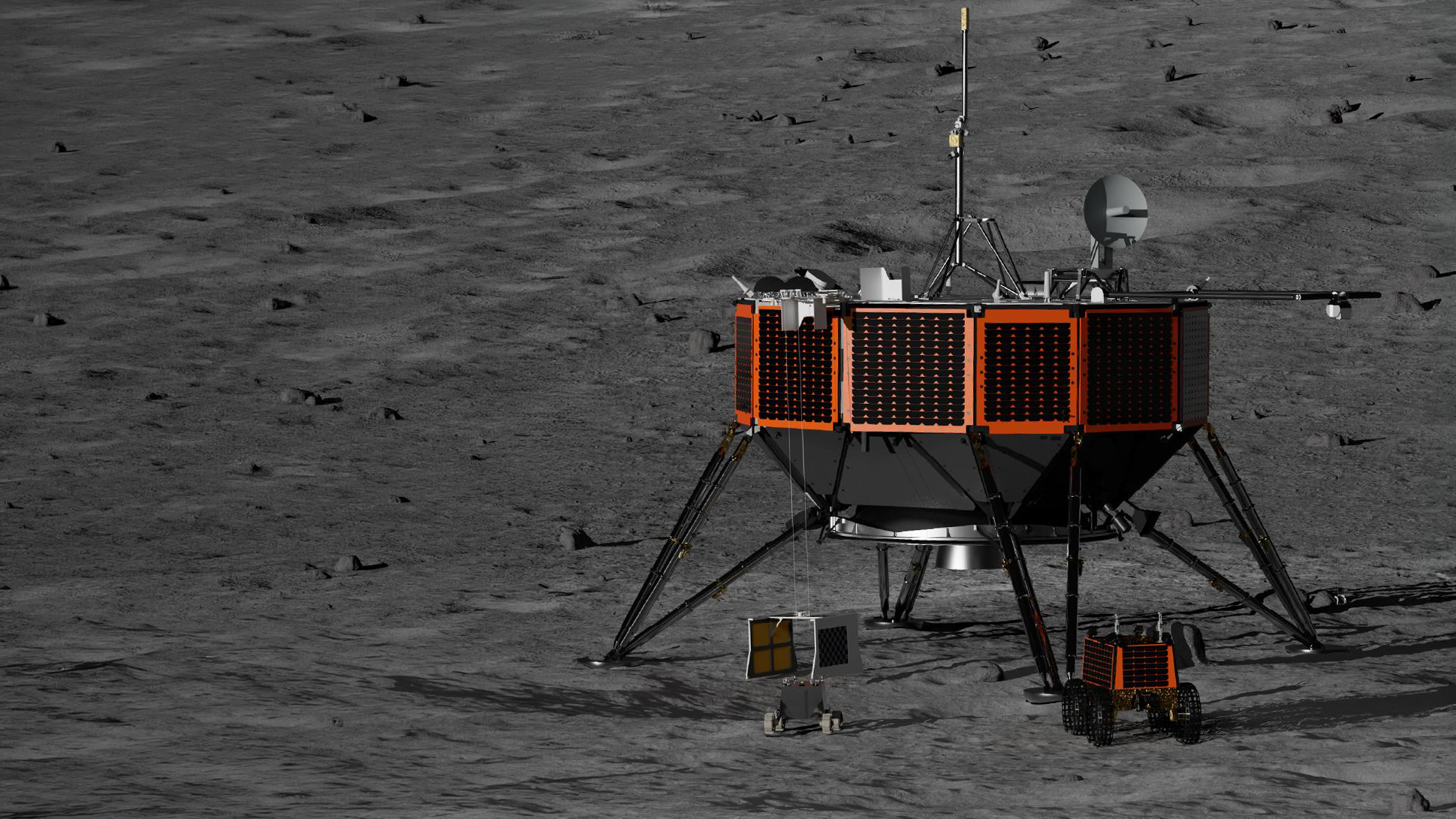
NASA announced on 27 March 2026 that it has awarded Intuitive Machines of Houston a $180.4 million contract to deliver Artemis‑linked science and technology payloads to the lunar South Pole. The award falls under the agency’s Commercial Lunar Payload Services (CLPS) program and is scheduled for a 2030 surface landing. The contract marks Intuitive Machines’ fifth CLPS award and follows two prior lunar deliveries on the IM‑1 and IM‑2 missions.
The mission will transport seven payloads, five of which are NASA‑funded, with a combined mass of 165 lb (75 kg). Instruments include the Stereo Cameras for Lunar Plume Surface Studies (SCALPSS) from Langley Research Center, which will capture high‑resolution stereo imagery of engine plume impacts and previously flew on IM‑1 and Firefly’s Blue Ghost Mission 1. NASA’s Ames Research Center will provide the Near‑Infrared Volatiles Spectrometer System (NIRVSS) to map mineral and ice composition; the spectrometer operated on Astrobotic’s Peregrine Mission One in 2024. The Mass Spectrometer for Observing Lunar Operations (MSolo) from Kennedy Space Center, demonstrated on IM‑2 in 2025, will analyze low‑molecular‑weight volatiles after touchdown. A four‑sensor Lunar Vehicle Radiation Dosimeter (LVRaD) will quantify surface radiation for future crewed activities. The Korea Astronomy and Space Science Institute’s Multifunctional Nanosensor Platform (MNP) will monitor plume‑regolith interactions and will be mounted on the Australian Space Agency’s Roo‑ver rover, a technology‑demonstration platform for autonomous lunar mobility. Additional hardware includes a NASA‑developed Laser Retroreflector Array for precise orbit determination and the “Sanctuary on the Moon” time‑capsule, a set of 24 synthetic‑sapphire discs curated in France and delivered via a prior CLPS mission.
These deliveries support Artemis objectives by expanding knowledge of regolith composition, volatile resources, and the radiation environment at the South Pole, data that are critical for designing sustainable landing systems and habitats. Regular CLPS missions, as noted by NASA’s CLPS manager, accelerate the transition from robotic exploration to a permanent human presence and lay groundwork for eventual crewed missions to Mars. The inclusion of international partners such as the Australian Space Agency and the Korea Astronomy and Space Science Institute underscores the collaborative nature of the program’s technology‑demonstration goals.