Kona Storms Flood Oʻahu
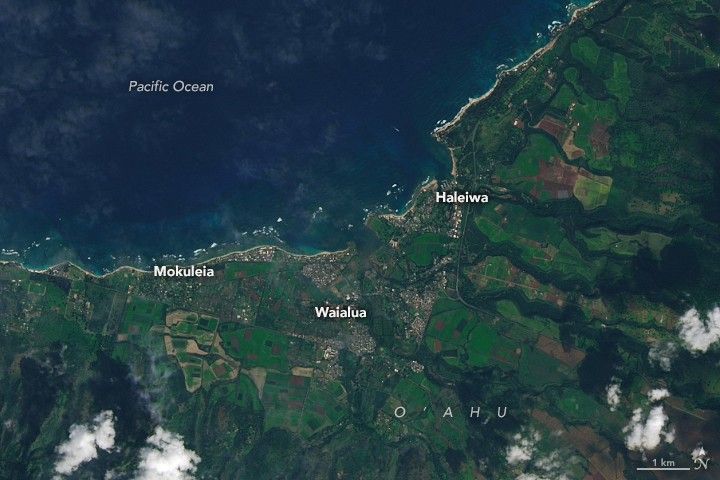
A powerful Kona storm brought widespread flooding to Oʻahu as heavy rainfall moved across the Hawaiian Islands, prompting warnings from local authorities and highlighting the role of slow-moving subtropical weather systems in producing extreme precipitation. Satellite observations from NASA captured the storm’s structure and rainfall distribution, showing how moisture-laden air interacted with Hawaii’s mountainous terrain to intensify rainfall across windward and urban areas.
Kona storms form when low-pressure systems develop northwest of Hawaii, reversing the typical northeast trade winds and drawing warm, moisture-rich air from the tropics toward the islands. As this air mass rises over steep volcanic terrain, rainfall rates increase significantly, often resulting in flash flooding and infrastructure disruption. NASA’s Earth-observing satellites monitored precipitation patterns and cloud structures during the event, providing insight into rainfall accumulation and storm evolution across Oʻahu and surrounding islands.
These weather systems typically occur between October and April and can linger for several days, increasing flood risk due to sustained rainfall rather than short-duration downpours. The latest storm demonstrated how Kona lows can rapidly escalate into hazardous flooding events, particularly when combined with saturated ground conditions and slow storm movement, which allow rainfall to accumulate over populated areas. Satellite monitoring continues to support forecasting and emergency response by tracking precipitation intensity and storm development across the Pacific region.