NASA X-Ray Mission Gets Fresh Look at 2,000-Year-Old Supernova
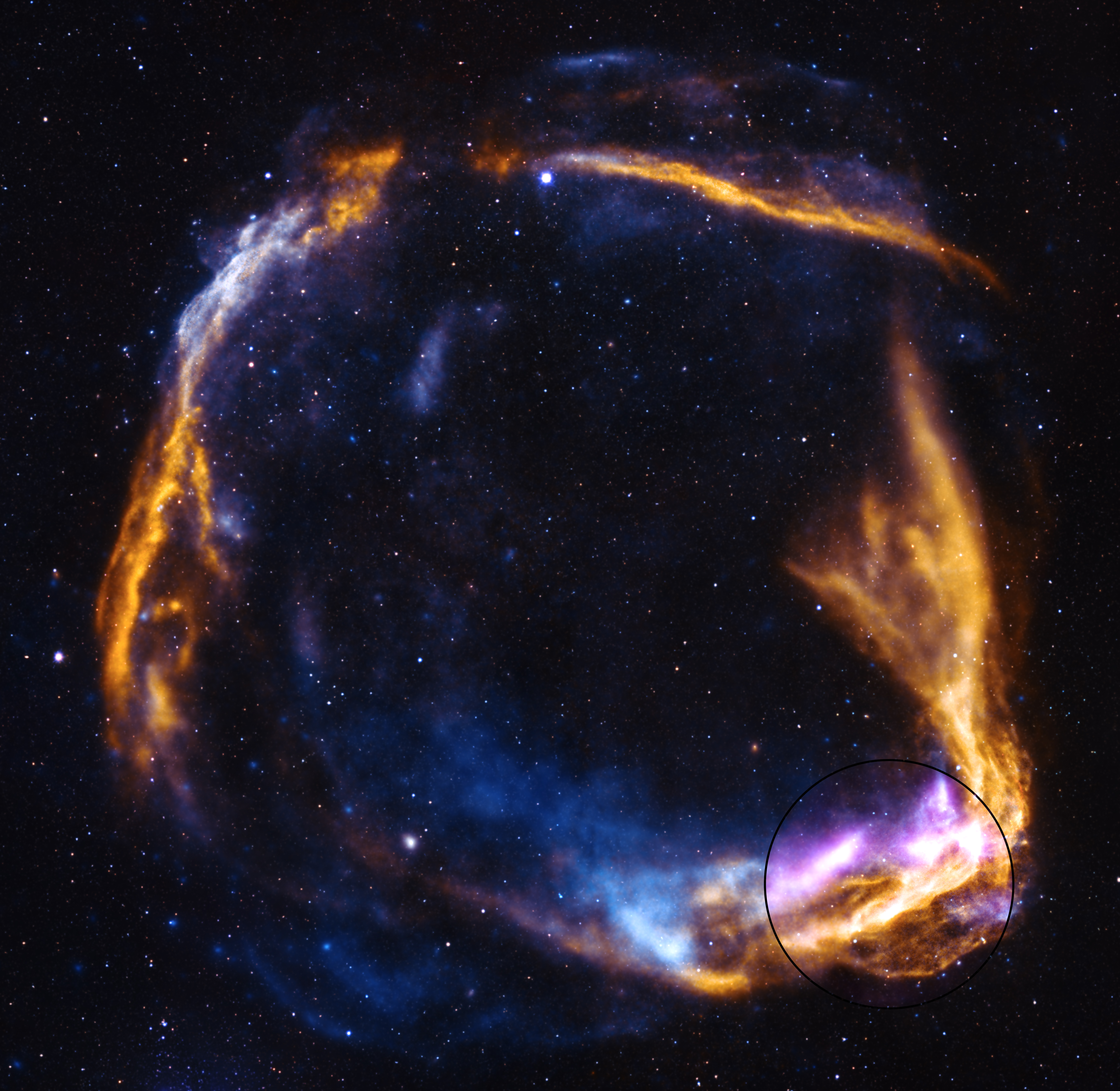
NASA’s Imaging X‑ray Polarimetry Explorer (IXPE) has returned new observations of a roughly 2,000‑year‑old supernova remnant, providing scientists with refined data on the structure and high‑energy processes of the exploded star’s debris. The updated X‑ray view captured details of magnetic fields and particle acceleration within the remnant, offering insights into how supernova shock waves energize particles and shape the surrounding interstellar medium. The remnant, catalogued as G11.2‑0.3 in the Milky Way, lies thousands of light‑years from Earth and is thought to have originated from a massive stellar explosion observed by early astronomers. These IXPE observations build on prior X‑ray studies, using the mission’s polarimetry capabilities to distinguish subtle variations in X‑ray emission that standard imaging techniques cannot resolve.
Launched in December 2021 as a collaboration between NASA and the Italian Space Agency, IXPE carries a set of X‑ray telescopes and detectors capable of measuring the polarization of high‑energy X‑ray light from cosmic sources. Polarimetry data enable researchers to infer geometric properties and magnetic field orientations within supernova remnants, complementing spectral and imaging observations from telescopes like Chandra and XMM‑Newton. In the case of G11.2‑0.3, IXPE’s measurements reveal distinct polarization signatures that are helping scientists better characterize how shock fronts accelerate electrons to near‑light speeds and how turbulent magnetic fields evolve in the expanding debris. This refined X‑ray portrait enhances the scientific return from the mission’s ongoing survey of high‑energy objects across the galaxy.
These IXPE observations contribute to broader efforts to understand the life cycles of massive stars and the mechanisms by which supernova explosions influence galactic environments. Supernova remnants such as G11.2‑0.3 serve as natural laboratories for studying extreme physics, including cosmic ray production and magnetic turbulence in the interstellar medium. By improving models of particle acceleration and magnetic field structure, data from NASA’s X‑ray polarimetry mission support interpretations of other high‑energy astrophysical phenomena and inform future observational campaigns across the electromagnetic spectrum.