Reminders of Where We’ve Been, Where We’re Going
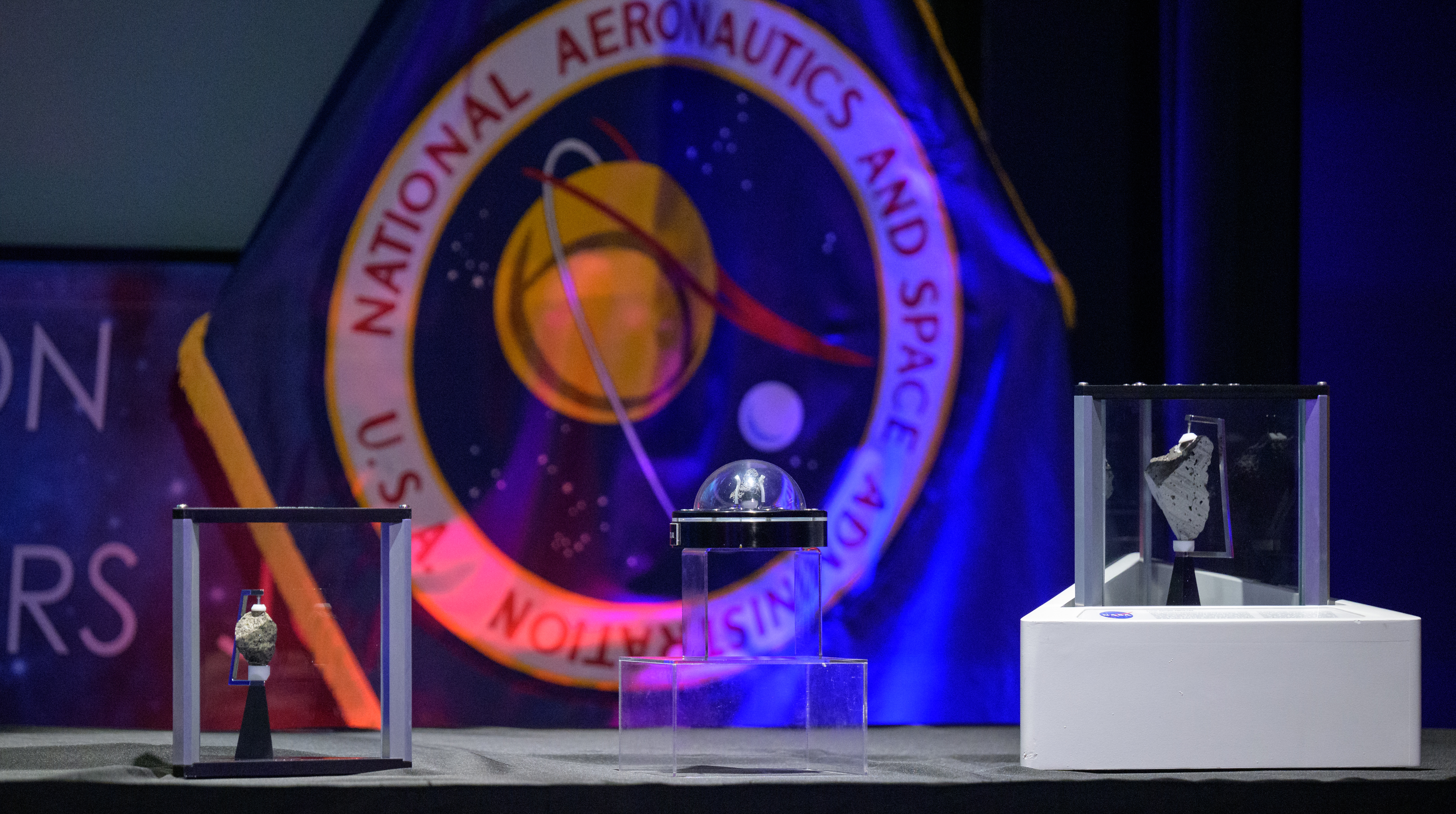
NASA displayed Apollo-era lunar samples during a March 24, 2026 event announcing a series of agencywide initiatives aimed at advancing U.S. leadership in space and accelerating long-term lunar exploration. The event highlighted the agency’s evolving priorities, including returning astronauts to the Moon for the first time in more than five decades, establishing the early components of a permanent lunar base, and advancing nuclear propulsion technologies for deep-space missions. The display of three Moon rocks served as a symbolic connection between past Apollo achievements and NASA’s future exploration strategy.
NASA leadership outlined mission priorities focused on sustained human presence beyond low Earth orbit, with plans centered on the lunar south pole and infrastructure required for long-duration operations. These objectives include deploying initial habitat elements, supporting surface mobility, and developing power systems to enable extended astronaut stays. The agency also emphasized advancing nuclear propulsion, which could significantly reduce travel times for missions beyond the Moon and support future crewed exploration of Mars and other deep-space destinations. The initiatives are designed to align with U.S. National Space Policy and strengthen long-term exploration capabilities across multiple programs.
The announcement reflects NASA’s transition from short-duration missions toward sustained exploration architecture, building on Artemis program milestones and commercial partnerships. By linking Apollo heritage with upcoming lunar missions, NASA aims to establish a permanent operational presence on the Moon while developing technologies required for deeper space exploration. The agency’s broader strategy positions the lunar surface as a testing ground for infrastructure, propulsion, and mission operations that will support future human missions beyond the Earth-Moon system.