NASA Unveils Initiatives to Achieve America’s National Space Policy
NASA has announced a suite of initiatives intended to align the agency’s work with the United States National Space Policy and accelerate progress across lunar exploration, deep‑space technology, and Earth science. At a briefing in Washington on March 24, 2026, NASA Administrator Jared Isaacman outlined how the agency will prioritise sustained lunar surface operations under the Artemis programme, enhance power and propulsion systems for missions beyond Earth orbit, and expand partnerships with commercial and international stakeholders. The policy‑linked actions are designed to provide a coordinated framework guiding NASA’s mission planning through the late 2020s and into the next decade.
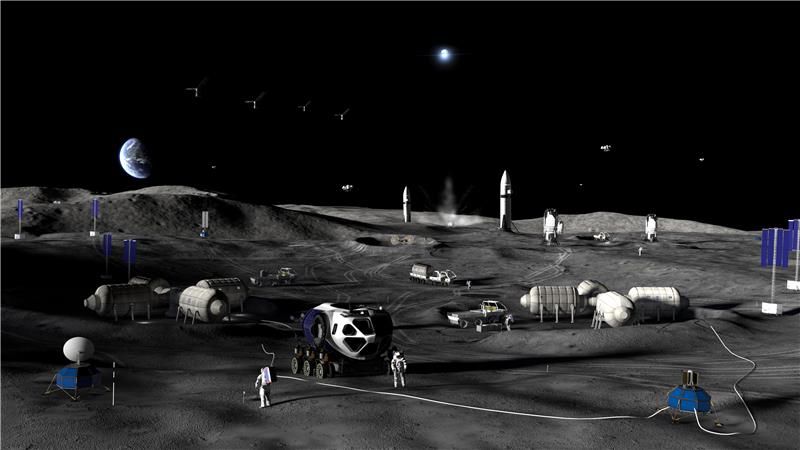
The announced initiatives include adjustments to mission cadence and resource allocation for Artemis, with a focus on establishing infrastructure on the Moon’s south polar region that can support repeated crewed landings and science operations. NASA leadership highlighted investment in technologies such as nuclear electric propulsion and advanced communications systems to extend mission reach and capability. Workforce development and industrial base expansions were also emphasised as foundational to executing complex exploration architectures. By coordinating these activities to the objectives defined in the National Space Policy, NASA intends to ensure consistency with national strategic goals while maintaining flexibility to support evolving priorities in human exploration, robotic science missions, and Earth observation.
The strategy reinforces the role of sustained lunar exploration as a stepping stone to future deep‑space endeavours such as missions to Mars, while reaffirming the importance of partnerships with commercial space firms and international space agencies. By integrating policy directives into programme execution, NASA aims to balance long‑term capability development with near‑term mission milestones, fostering a stable planning environment for industry, academia, and government collaborators as they contribute to the nation’s space exploration agenda.