NASA’s Hubble Revisits Crab Nebula to Track 25 Years of Expansion
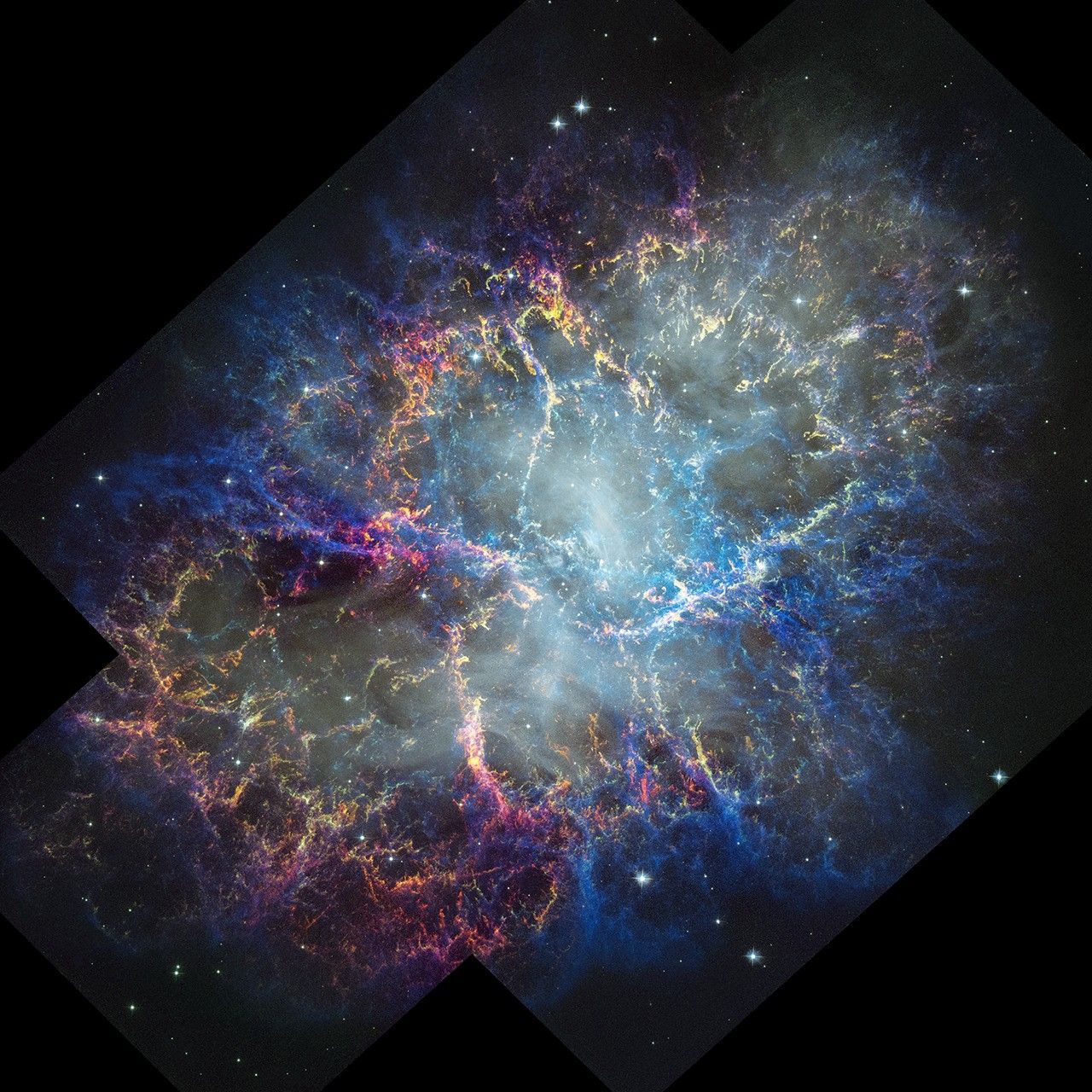
NASA’s Hubble Space Telescope has revisited the Crab Nebula to document how the iconic supernova remnant has expanded over 25 years, producing new high‑resolution imagery that directly compares observations first made in 1999 with follow‑ups captured in 2024. The nebula, the debris of a massive star that exploded in the constellation Taurus in 1054, lies about 6 500 light‑years from Earth and spans roughly 11 light‑years across. The recent observations highlight outward movement of the filamentary structure at millions of miles per hour and detail subtle changes in gas distribution and brightness that reflect the complex aftermath of the original explosion.
The Hubble revisits used cameras including the Wide Field Camera 3 (installed during a shuttle servicing mission) to collect a mosaic of the Crab Nebula, allowing astronomers to measure its continued expansion and evolution. By aligning the new images with the 1999 dataset from the Wide Field and Planetary Camera 2, researchers traced motion in the nebula’s filaments, tied to energy injected by the rapidly spinning neutron star, or pulsar, at the remnant’s core. Comparisons of color variations across decades also yield insights into temperature and density differences in the supernova remnant’s gas, while the longevity of Hubble’s instruments makes possible this rare multi‑decadal study.
Observations of the Crab Nebula’s changing structure contribute to a broader understanding of how pulsar wind nebulae evolve over centuries, linking long‑term imaging campaigns with theoretical models of shock dynamics and magnetic field interactions. The data also complement other wavelength studies from observatories such as Chandra and ground‑based telescopes, helping refine models of particle acceleration and filament expansion as the remnant continues to shape its local interstellar environment.