NASA’s Roman Observatory Passes Final Major Prelaunch Tests
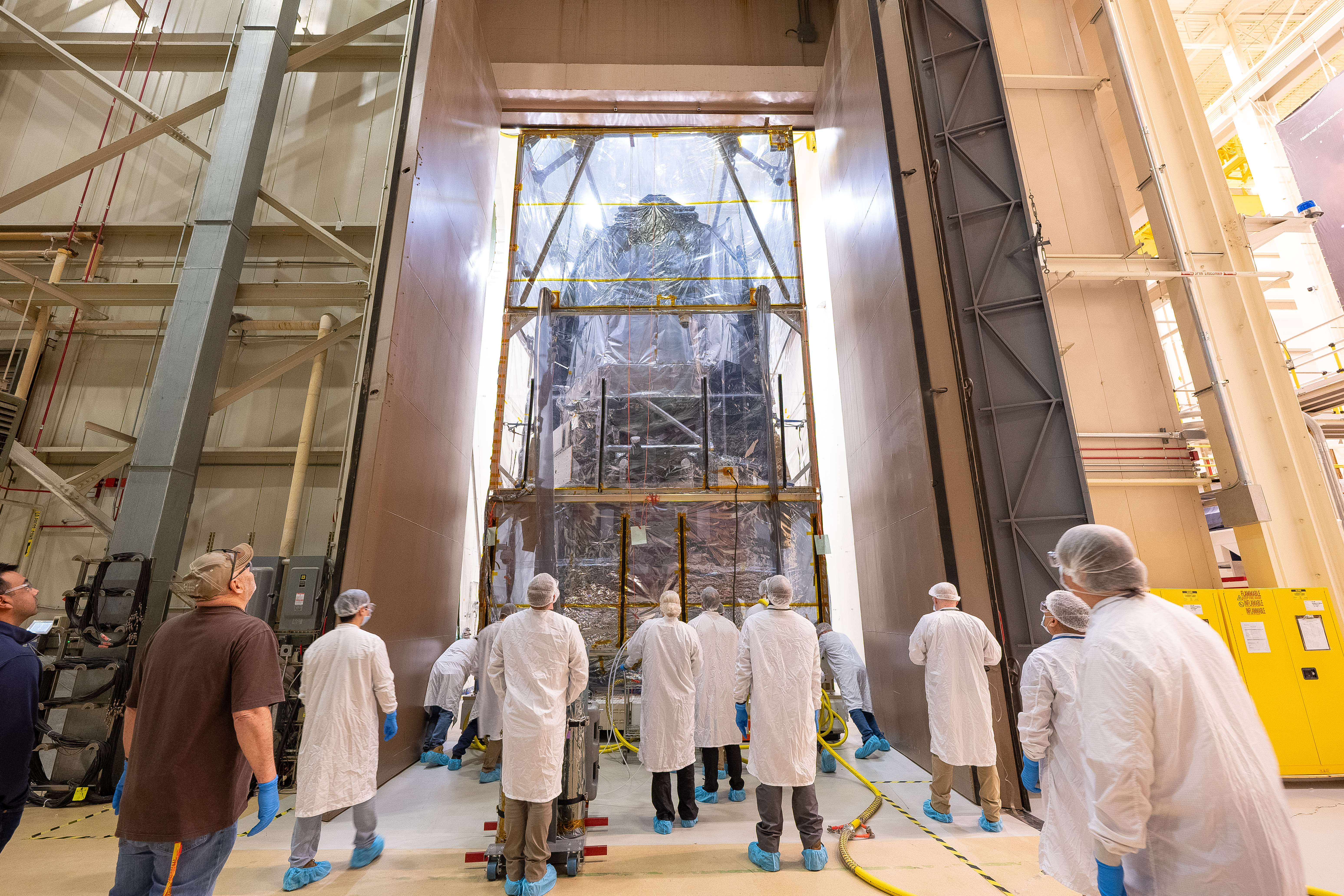
NASA’s Nancy Grace Roman Space Telescope has passed its final major prelaunch tests at facilities in California and is now moving into preparations for shipment ahead of its planned launch no earlier than May 2026. The completion of environmental and optical performance testing on March 30, 2026 confirmed that the spacecraft’s integrated systems meet requirements for launch and space operations. The Roman observatory, slated to operate in sun‑Earth L2 orbit, aims to conduct wide‑field infrared surveys to study dark energy, exoplanets and infrared astrophysics. Successful conclusion of these final tests marks the end of ground‑based verification and the beginning of pre‑launch processing that will culminate in encapsulation for flight.
The final test campaign included acoustic, vibration and thermal vacuum testing that simulated the conditions Roman will endure during launch and while in space. Engineers verified the performance of the telescope’s Wide Field Instrument (WFI), its primary science payload with a field of view 100 times larger than that of the Hubble Space Telescope, and confirmed the stability of the observatory’s cryogenic systems needed for infrared observations. Optical performance checks confirmed sensor calibration, alignment and imaging performance across the relevant wavelengths. The spacecraft’s propulsion, power, communications and spacecraft bus systems also demonstrated compliance with mission requirements under simulated operational conditions.
Passing the final prelaunch milestones clears Roman to begin transportation to its launch processing facility, where final inspections, fueling and integration with its launch vehicle interface will occur. The mission’s science programme will survey vast areas of the sky to address questions about the expansion of the universe, dark matter distribution and population statistics of exoplanets, providing data that will complement observatories such as JWST and Euclid. As NASA prepares Roman for launch, the mission enters its last phase of pre‑flight readiness that will enable it to begin its astrophysics investigations in deep space.