NASA’s X-59 Experimental Supersonic Aircraft Makes Second Flight
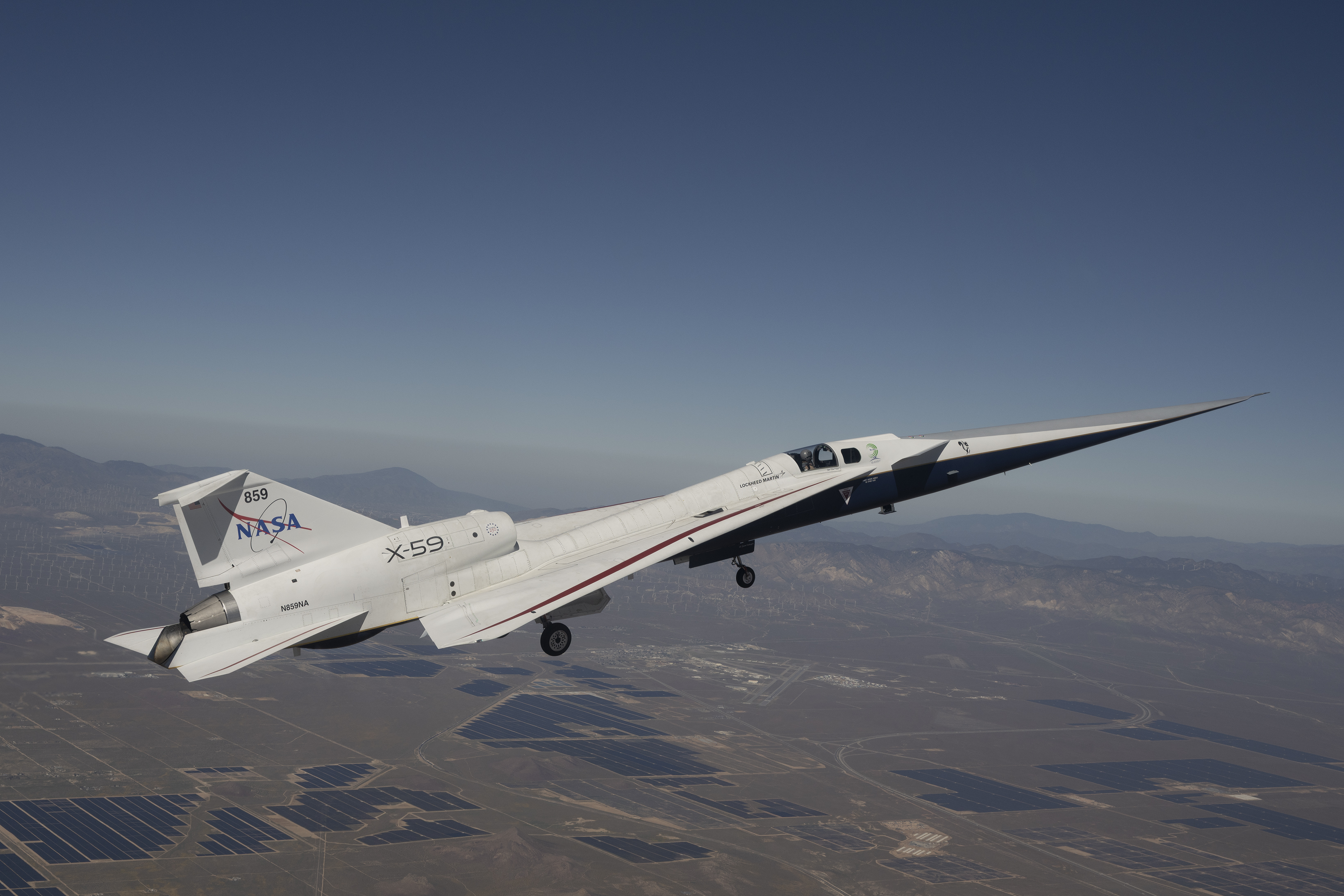
NASA’s experimental X‑59 quiet supersonic aircraft completed its second test flight from NASA’s Armstrong Flight Research Center near Edwards, California on March 20, 2026, advancing the Quiet Supersonic Technology (Quesst) research campaign. The subsonic flight was part of a planned series of dozens of test sorties aimed at expanding the aircraft’s flight envelope this year. Flight crews collected performance data that will inform upcoming experiments, despite the mission ending earlier than scheduled due to an onboard system warning that prompted an abbreviated return to base.
The X‑59, developed by NASA in partnership with Lockheed Martin, aims to demonstrate technologies that significantly reduce the intensity of sonic booms by creating a quieter shock signature, known as a “thump,” at supersonic speeds. Built under the Quesst project, the aircraft features a long, slender fuselage and a single modified GE F414 engine optimized for low‑boom flow characteristics. This second flight formed part of an “envelope expansion” phase, during which progressively higher speeds and altitudes will be tested to validate aerodynamic performance, systems integration and handling qualities ahead of future high‑Mach runs.
The ongoing test campaign for the X‑59 follows its historic first flight in October 2025 and contributes to NASA’s broader effort to provide regulatory authorities such as the FAA and ICAO with empirical data on noise signatures associated with quieter supersonic travel. Collecting this data over multiple flights and, ultimately, over local communities is central to informing potential revisions to the longstanding ban on civil supersonic flight over land. The information gathered from the Quesst mission may shape the development of next‑generation commercial supersonic aircraft and influence regulatory frameworks for high‑speed air travel in the coming decade.