Restless Kīlauea Launches Lava and Ash
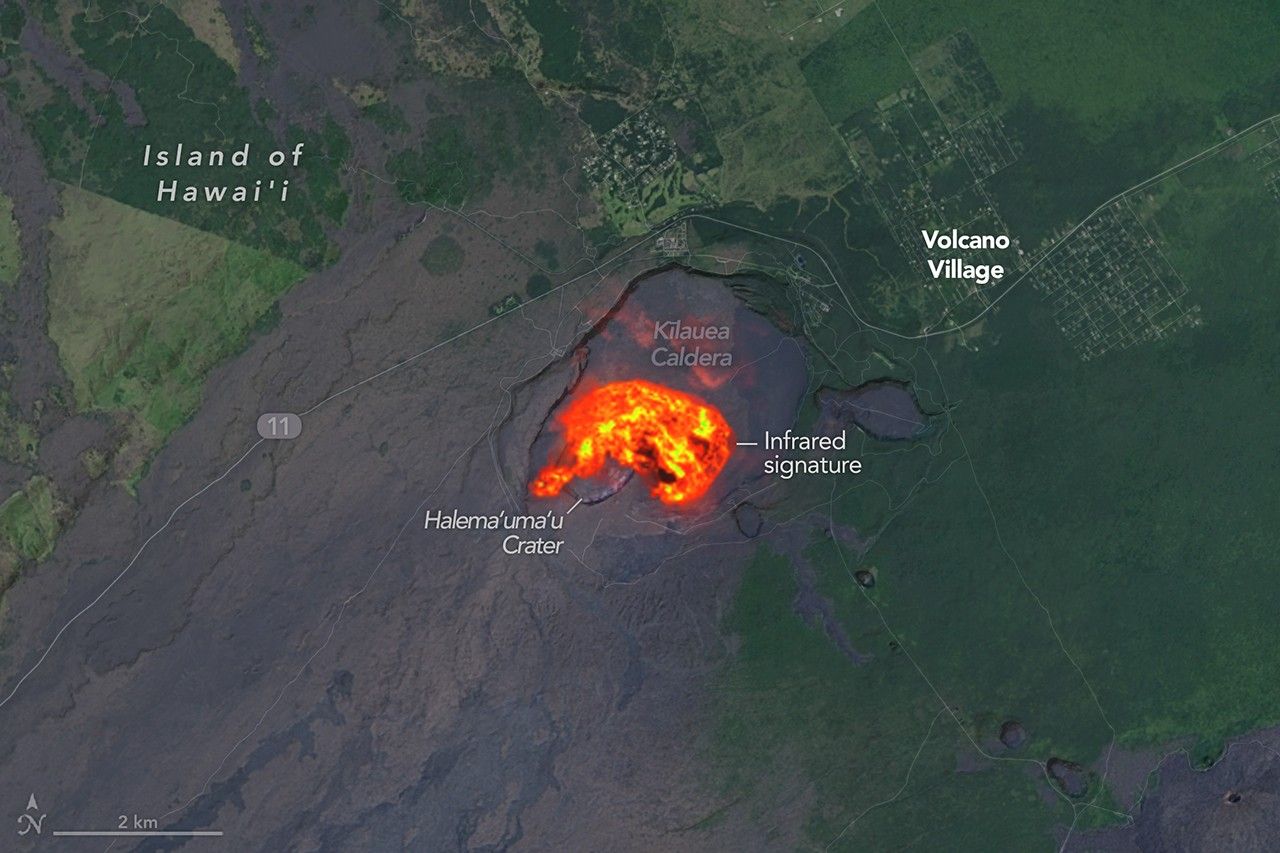
NASA’s Earth Observatory featured an Image of the Day on March 20, 2026, showing renewed explosive activity at Kīlauea, a highly active volcano on Hawaiʻi’s Big Island, during its ongoing eruption that began in December 2024. The latest eruptive episode, labelled Episode 43, was characterised by high lava fountains and significant ash dispersal from the summit crater, visible in satellite imagery that highlights thermal signatures and plume activity from space. This marks a continuation of episodic behaviour that has persisted into the volcano’s second year of activity.
Kīlauea’s current eruptive phase has produced dozens of lava fountaining events varying in duration and intensity, driven by rising magma beneath the summit’s Halema‘uma‘u crater that intermittently bursts through to the surface. The lava fountains have generated both molten rock flows and widespread ash plumes, with ash and volcanic particles lofted into the lower atmosphere and visible against the darker landscape in observational data. Satellite instruments such as Landsat 9’s Operational Land Imager (OLI) provide regular monitoring of surface heat and ash distribution, enabling scientists to document the volcano’s dynamic behaviour and plume extent from orbit in near‑real time.
Continuous remote sensing of Kīlauea’s activity allows researchers to track the evolution of eruptive episodes and assess potential hazard implications for local communities and aviation, as ash plumes can affect air quality and disrupt regional travel. The frequent resurgence of lava fountains over the past year places Kīlauea among the most closely watched eruptive volcanoes on Earth, with data from space‑borne platforms supporting both scientific analysis and hazard monitoring efforts. These observations contribute to long‑term records of volcanic behaviour that improve understanding of processes driving episodic eruptions and their interactions with the atmosphere and surface environment.