See NASA’s GUARDIAN Catch a Tsunami
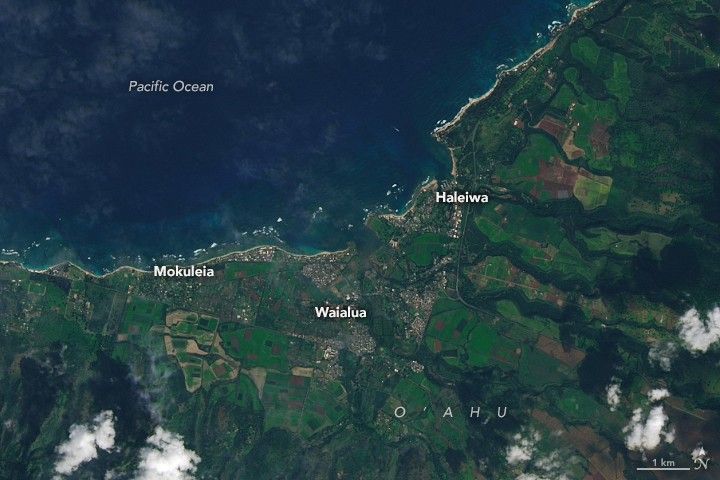
In March 2026, NASA’s Jet Propulsion Laboratory showcased how its experimental tsunami‑detection system, GUARDIAN (GNSS Upper Atmospheric Realtime Disaster Information and Alert Network), tracked a Pacific tsunami event triggered by a magnitude 8.8 earthquake off Russia’s Kamchatka Peninsula and signalled the developing wave tens of minutes before tide gauges recorded its arrival near Hawaii. The event sequence began on July 29, 2025, when seismic activity displaced large ocean volumes, generating a fast‑moving wave that crossed the Pacific at speeds exceeding 500 miles per hour. Satellite navigation signals passing through the ionosphere registered subtle perturbations caused by the tsunami’s atmospheric pressure waves, enabling GUARDIAN’s algorithms to flag the hazard in near real time and provide lead time that augments existing coastal monitoring systems.
GUARDIAN’s detection process draws on signals from GPS and other Global Navigation Satellite System constellations received by more than 350 ground stations spread around the Pacific Ring of Fire. As tsunami‑induced atmospheric acoustic and gravity waves propagated upward, they created measurable distortions in ionospheric total electron content that GUARDIAN interprets as indications of a propagating ocean wave. The system registered signatures of the tsunami’s movement roughly eight minutes after the earthquake and continued to follow its progression across ocean basins, identifying an incoming wave off Kauai about 32 minutes before conventional tide gauge confirmation. While not a stand‑alone public warning network, GUARDIAN’s open access to these ionospheric data offers scientists and analysts an additional, cost‑effective source of early warning information without deploying new space hardware.
By leveraging existing satellite infrastructure and ground receivers, GUARDIAN complements traditional seismic and buoy‑based approaches that depend on sea floor pressure sensors and modeling to assess tsunami risk. The case study reinforces the potential of space‑referenced systems to provide actionable insights during natural hazards, especially where in‑situ instruments are sparse or distant from hazard sources. As atmospheric disturbances precede surface wave impact, these datasets can improve situational awareness for researchers and emergency response planners tasked with assessing tsunami threats across vast and remote ocean regions.